Online Scams in JB: How to Spot Romance, Job-Lure, and Macau Scams Before They Strike
Why JB Is a High-Risk Zone for Scams
Johor Bahru sits at one of Southeast Asia's busiest crossroads. Every day, tens of thousands of Malaysians commute to Singapore for work, and budget travellers pass through on their way to or from the Causeway. That constant flow of people — many of them young, mobile, and far from their support networks — makes JB a prime hunting ground for scam syndicates.
Malaysia loses tens of billions of ringgit to scams every year. The three types most likely to hit someone in or passing through JB are romance scams, fake job-lure trafficking schemes, and Macau-style police-impersonation calls. Knowing how each one works can save you from becoming the next victim.
1. Romance Scams: Tinder, WeChat, and the Long Con
A 28-year-old delivery worker in Johor Baru lost RM63,000 to a woman he met on WeChat in early 2025. A woman in Sibu lost RM86,841 to a Tinder match posing as a Korean man in 2024. These are not isolated cases — Malaysian police reported RM23.3 million lost to online love scams by women alone in the first half of 2024.
How it works
- Scammer creates a polished profile — often using stolen photos of an attractive foreign national (a soldier, engineer, or doctor working overseas).
- Contact starts on a dating app (Tinder, MiCo) or social platform (WeChat, Instagram, Facebook).
- They invest weeks or months building an emotional bond — daily messages, voice notes, small "gifts."
- Once trust is established, a crisis emerges: they need money urgently for a medical emergency, customs clearance, or a business opportunity that "only you can help with."
- Requests escalate. The "person" is never able to meet in real life — there is always a reason.
Red flags
- Profile seems too perfect; photos look like a model or stock image.
- Claims to be overseas (often military, oil rig, or international business).
- Conversation moves very quickly to declarations of love or strong attachment.
- Avoids video calls, or appears only briefly and in poor lighting.
- Eventually asks you to transfer money, buy gift cards, or invest in a cryptocurrency platform they recommend.
What to do
- Reverse image-search their profile photo using Google Images or TinEye before trusting anyone you meet online.
- Never send money to someone you have not met in person, regardless of how long you have been talking.
- Check suspicious phone numbers or bank accounts at Semak Mule (semakmule.rmp.gov.my) — PDRM's free portal to verify if a number or account has been flagged for fraud.
- If you have already transferred money, call NSRC 997 immediately (8 AM–8 PM daily, including public holidays). Speed is critical — early reports have recovered nearly all funds; an 8-hour delay can mean recovering only a fraction.
2. Fake Job Offers: The JB–Singapore–Southeast Asia Pipeline
This scam specifically targets people in the JB–Singapore corridor. The pitch sounds legitimate: a high-paying clerical, customer service, or IT job in Singapore or elsewhere in Southeast Asia, with no interview required and all travel arranged. The reality is a guarded scam compound in Cambodia, Myanmar, or Laos — and you are the product, not the employee.
In one documented case, Nur Elisha, a 23-year-old diploma holder from Johor Bahru, was approached in November 2023 with a fake clerical job in Singapore. She was instead flown through Changi Airport to Phnom Penh, Cambodia, held in a compound, and forced to run online scams targeting others. She eventually escaped with help from her family, the Malaysian Humanitarian Organisation, and the Malaysian embassy — returning home via KLIA.
How it works
- A recruiter contacts you on Telegram, WhatsApp, Facebook, or through a mutual acquaintance.
- The offer involves unusually high pay for simple work (data entry, customer chat, social media management).
- They handle everything: flights, accommodation, visa — so you have no control over the itinerary.
- On arrival, your passport is confiscated. You are taken to a compound and told to run scam operations or face violence, being sold to a worse compound, or debt bondage.
Red flags
- Job offer arrives unsolicited via Telegram or WhatsApp from someone you barely know.
- Pay is disproportionately high for unskilled work (RM5,000–RM15,000/month for basic tasks).
- No formal interview, no employment contract, no verifiable company address.
- They urgently want you to leave within days and arrange your travel themselves.
- The destination keeps changing or is vague ("Southeast Asia," "border area").
- They ask for your passport details before you have signed anything.
What to do
- Verify any overseas job offer by checking the company's official website independently — do not click links they send you.
- Search the company name plus "scam" on Google before agreeing to anything.
- Tell a trusted person where you are going and keep control of your own passport and travel documents at all times.
- If you suspect a job offer is a trafficking lure, report it to PDRM CCID Infoline: 013-211 1222 or lodge a report at ccid.rmp.gov.my.
- If you are already trapped overseas, contact the Malaysian embassy in that country immediately.
- Singapore-side workers: verify suspicious recruitment via ScamShield at 1799 (24/7) or the Singapore Police Force anti-scam channels.
3. Macau Scam / Police-Impersonation Calls
Despite the name, this scam has nothing to do with Macau. It involves a caller who claims to be from PDRM, the courts, Bank Negara Malaysia, the Inland Revenue Board (LHDN), or customs. They tell you that your identity has been used in a crime, your bank account is frozen, or there is a warrant for your arrest — and that you must transfer money to a "safe account" to cooperate with an investigation.
How it works
- You receive a call — sometimes preceded by an automated message — from someone claiming to be a government official.
- They provide a fake badge number, case number, or "official" reference to sound credible.
- The call is transferred to a supposed "superior officer" or "Bank Negara officer" who escalates the pressure.
- They insist you keep the call secret and not tell family members — a classic isolation tactic.
- You are told to transfer your savings to a designated account immediately to "protect" them or to prove your innocence.
Red flags
- Any government agency asking you to transfer money over the phone is a scam. PDRM, BNM, and LHDN do not call you and demand bank transfers.
- The caller asks you to keep the conversation secret from your family.
- There is pressure to act immediately — "the warrant will be issued in one hour."
- The call is transferred multiple times between "departments."
- They ask for your banking credentials, TAC/OTP codes, or online banking login details.
What to do
- Hang up immediately. No legitimate government agency will demand money over the phone.
- Call the agency they claimed to be from directly using the official number from their website — not the number the caller gave you.
- If you have transferred money, call NSRC 997 right away (8 AM–8 PM). Outside those hours, call your bank's 24/7 fraud line to freeze the transaction.
- Check if the phone number or account number has been flagged at Semak Mule.
Your Quick-Reference Toolkit
| Tool | What It Does | Contact |
|---|---|---|
| NSRC Hotline | Emergency scam response — freeze funds, lodge report | 997 (8 AM–8 PM daily incl. public holidays) |
| PDRM CCID Infoline | Cybercrime reports and enquiries | 013-211 1222 |
| Semak Mule | Check if a bank account or phone has been flagged as a mule | semakmule.rmp.gov.my |
| ScamShield (SG) | Singapore scam helpline and app — verify suspicious contacts | 1799 (24/7) or scamshield.gov.sg |
| MyCERT | Cybersecurity incident reporting | 1-300-88-2999 or mycert.org.my |
| Your bank's 24/7 fraud line | Freeze transactions outside NSRC hours | Number on the back of your bank card |
A Safe Base in JB
If you are passing through or staying in Johor Bahru, having a secure, reliable base helps. At Pelangi Capsule Hostel, we host a mix of budget travellers, Singapore commuters, and cross-border workers every week — and we are always happy to share local knowledge, including what to watch out for in the area.
We are located at 26A Jalan Perang, Taman Pelangi, 80400 Johor Bahru. Capsule pods start from RM30/night on weekdays and RM35/night on weekends, with monthly packages from RM600. Check-in is at 2 PM and check-out at 12 PM. Book your pod here or reach us on WhatsApp at +60 12-708 8789.
Sources
- PDRM CCID Semak Mule portal — semakmule.rmp.gov.my
- National Scam Response Centre (NSRC) — nfcc.jpm.gov.my
- The Star: Call 997 if you've been scammed, says Fahmi (March 2026)
- New Straits Times: National Scam Response Centre's 997 hotline (2023)
- NST: Delivery worker loses RM63,000 in online love scam, Johor Baru (January 2025)
- Malay Mail: Bukit Aman — RM23.3m lost to love scams by women in 2024
- Malay Mail: Tinder 'oppa' tricks Sibu woman out of RM86,841 (November 2024)
- The Vibes: Job offer turns nightmare — JB woman trafficked to Cambodia (July 2025)
- Malaysia MFA: Action against job scam syndicates — ASEAN 2025 Chairmanship
- RHB Bank: Macau Scam — how it works and red flags
- ScamShield Singapore — scamshield.gov.sg (helpline 1799, 24/7)
- MyCERT — CyberSecurity Malaysia (1-300-88-2999)
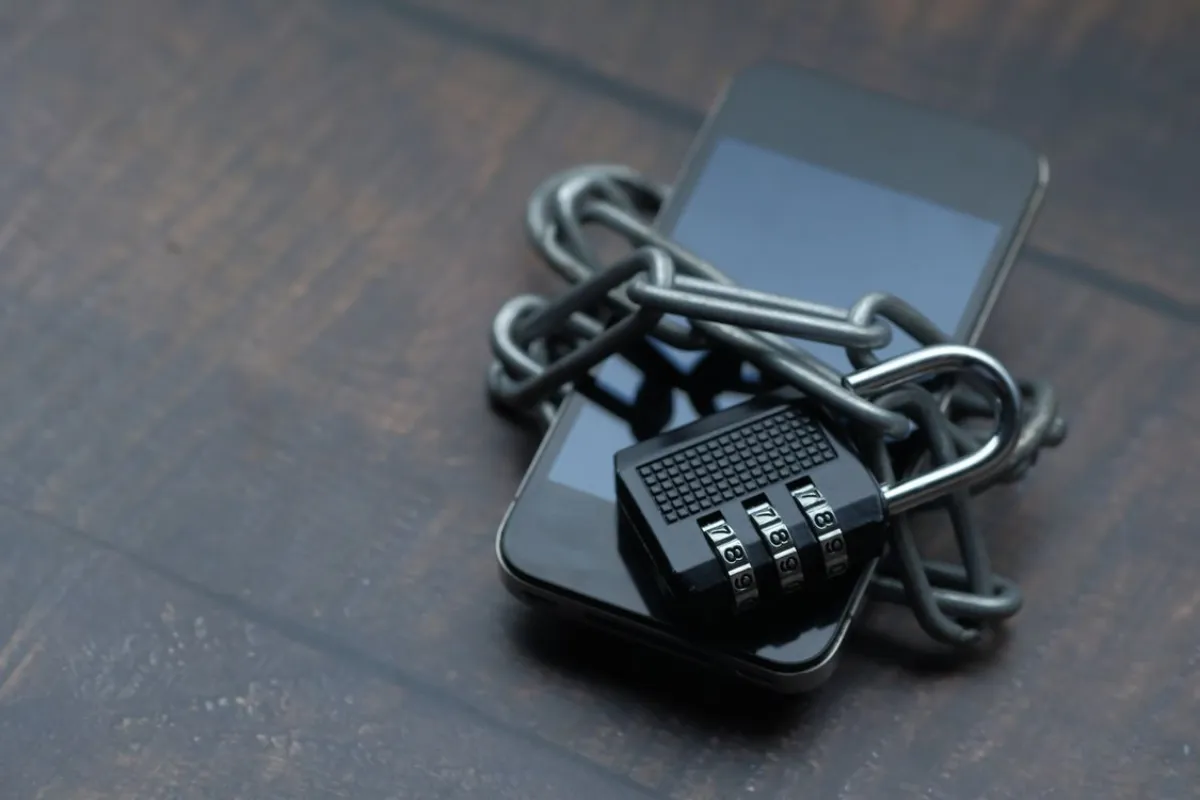
- Image credit: Pexels — "Close up of a Smart Phone with a Lock" by Towfiqu barbhuiya (Pexels Free License)
- Hotline numbers and URLs change. Always verify current details at official government websites before relying on them.
Related Articles

RTS Link Opens January 2027: What JB Travellers Need to Know Now
10 Sep 2026 · 6 min read
Cross-Border Grab from Singapore to JB: Fares, Rules, and When It's Worth It
19 Aug 2026 · 4 min read
JB–Singapore Immigration: How to Beat the Queue in 2026 (MyNIISe, E-Gates & Timing)
17 Aug 2026 · 5 min read
Comments
No comments yet. Be the first!